Work in Progress - The new build home part two

 |
|
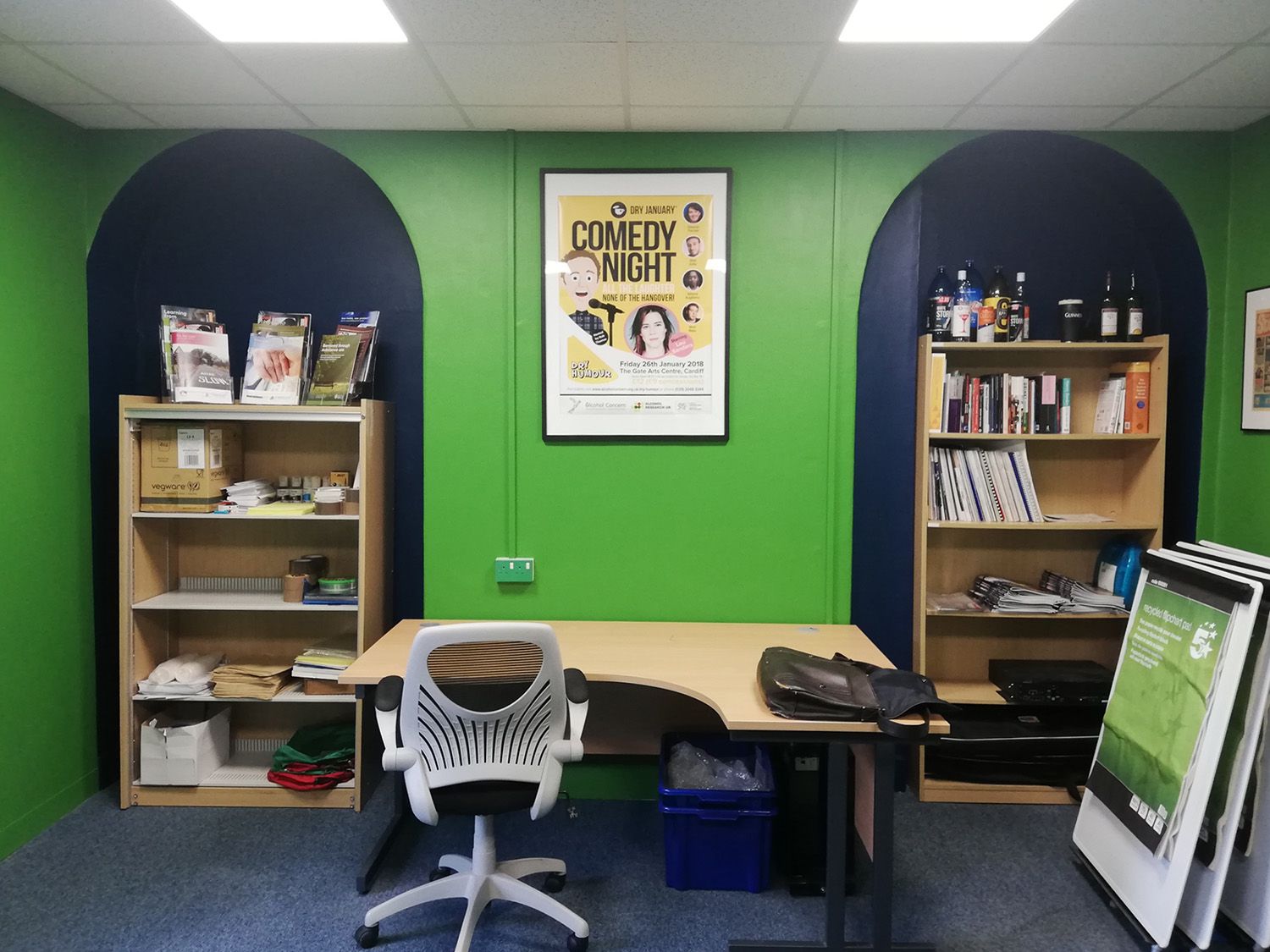
Do you prefer to work in an office or at home (or another location)? Most of us will have grown up with the idea that working in an office is expected, but during the pandemic lockdowns, millions of us were forced to work from home. Some found that they liked the flexibility of working this way, while others felt that combining work with home life was too difficult and that clearer boundaries were needed. The debate around whether we should be working from home or in designated offices has been raging since lockdown changed the way we work, and it seems to be heating up rather than going away. When almost everyone was forced to work from home, we began to think differently about the role of work in our lives, and how best to balance it with family and our other commitments. Working from home got rid of long commutes, travel expenses, and the need to dress smartly every day. It could shorten a long day for an employee who had to travel to the office, resulting in less tiredness and more focus. There were savings on buying lunches, or time savings to be had from not making packed lunches. There was no longer a need to pay higher rents or have a higher mortgage just to live close enough to commute to the office. Those who wanted to work outside the usual 9 to 5 hours had more opportunities to do so, and those with caring responsibilities or with younger children had more opportunities to make sure life could fit around work. When my two children were sitting their A levels and GCSEs at the same time during lockdown (really well timed!) I was working from home and would have found it impossible to make sure they were studying if I was in an external office. It worked for me, but then I run my own business and could catch up later in the day when needed. I didn’t have a boss expecting me to be at my desk from 9 to 5. And I actually managed to spend some time during lockdown redecorating my office, which really needed sprucing up as it was dreary and colourless. I took it from this: |
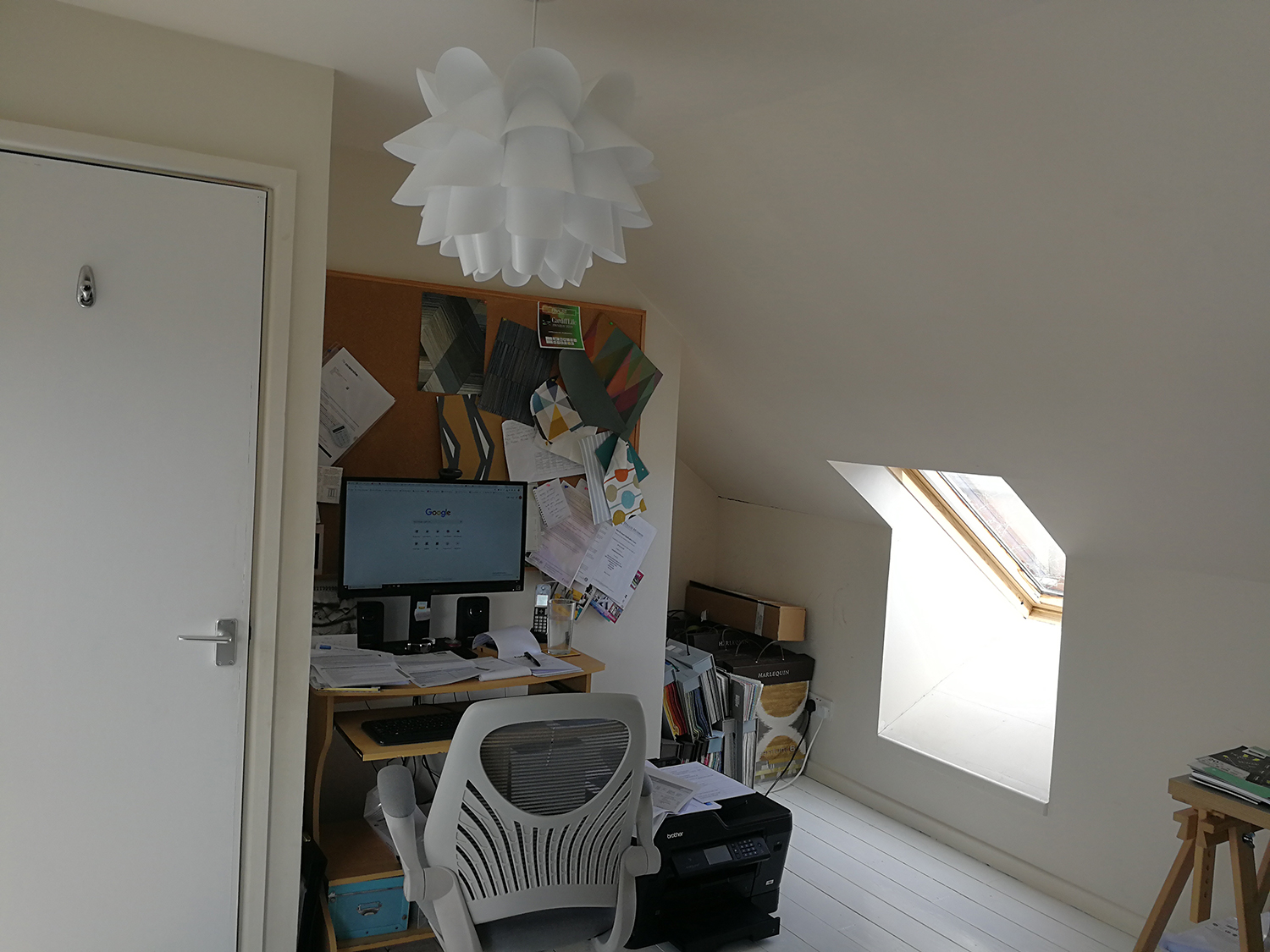 |
|
To this: |
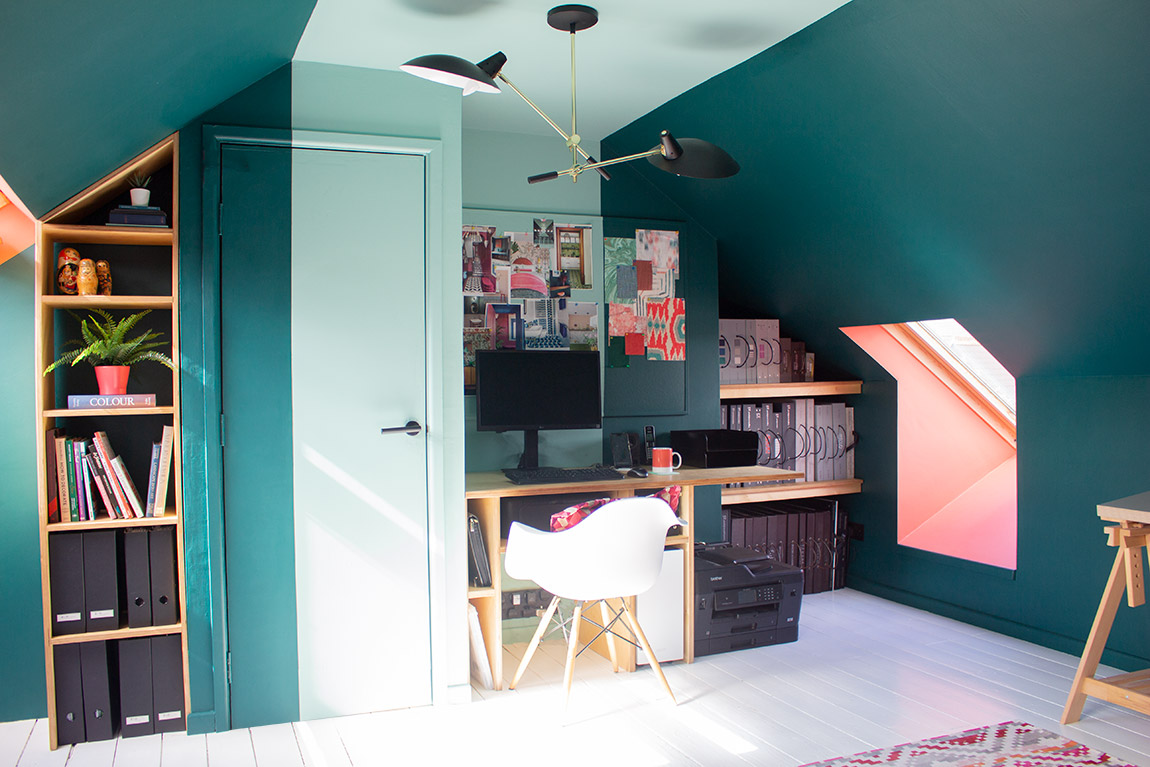 |
It was a lot nicer to work in the space after the refresh. And studies have shown that since lockdown, many people have continued to work from home as they found they liked the new lifestyle. Lots of companies gave up their expensive offices in the cities and reaped the rewards of having a happier workforce and fewer overheads. But over the last couple of years there has been a shift back to working in the office, especially from larger companies, as some have seen productivity fall and a lack of motivation to work. In 2025, Lord Sugar told the BBC that workers have “got to get their bums back in the office” and that “young people just want to sit at home”. This could be because he is of an older generation that expects people to work in offices, but it could also be that he’s concerned about the next generation of workers. He says that if you are working remotely, you don’t benefit from learning from more experienced colleagues, and there’s no substitute for being in the same room as someone else, being able to see what they do and how they do it to learn more about your own job. |
|
For some, the argument for being in the office is so strong that companies have even gone so far as to mandate that employees return to the office five days a week. Amazon, Tesla, Samsung and Dell are just a few of the big names who have taken this step. Dell’s reasoning is that “what we’re finding is that for all the technology in the world, nothing is faster than the speed of human interaction”, and their new policy is that anyone living within an hour’s commute of the office should be working there five days a week. They’ve gone even further, saying that staff who live more than an hour’s commute away can work remotely, but that they won’t be promoted without executive sign off. This means that your career prospects could be damaged if you choose to work from home. KPMG, a global organisation who provide advisory and analytical services to businesses, carried out a study in 2024 which found that 83% of UK CEOs predict a return to full time office work over the next few years. But forcing reluctant employees back into the office doesn’t make sense, and other studies have shown most office workers prefer to work in the office three days or less, and that young workers were particularly against being forced back into the office. Reportedly, a third of professionals aged 25-24 questioned it, saying they are likely to resign if more time in the office was required. |
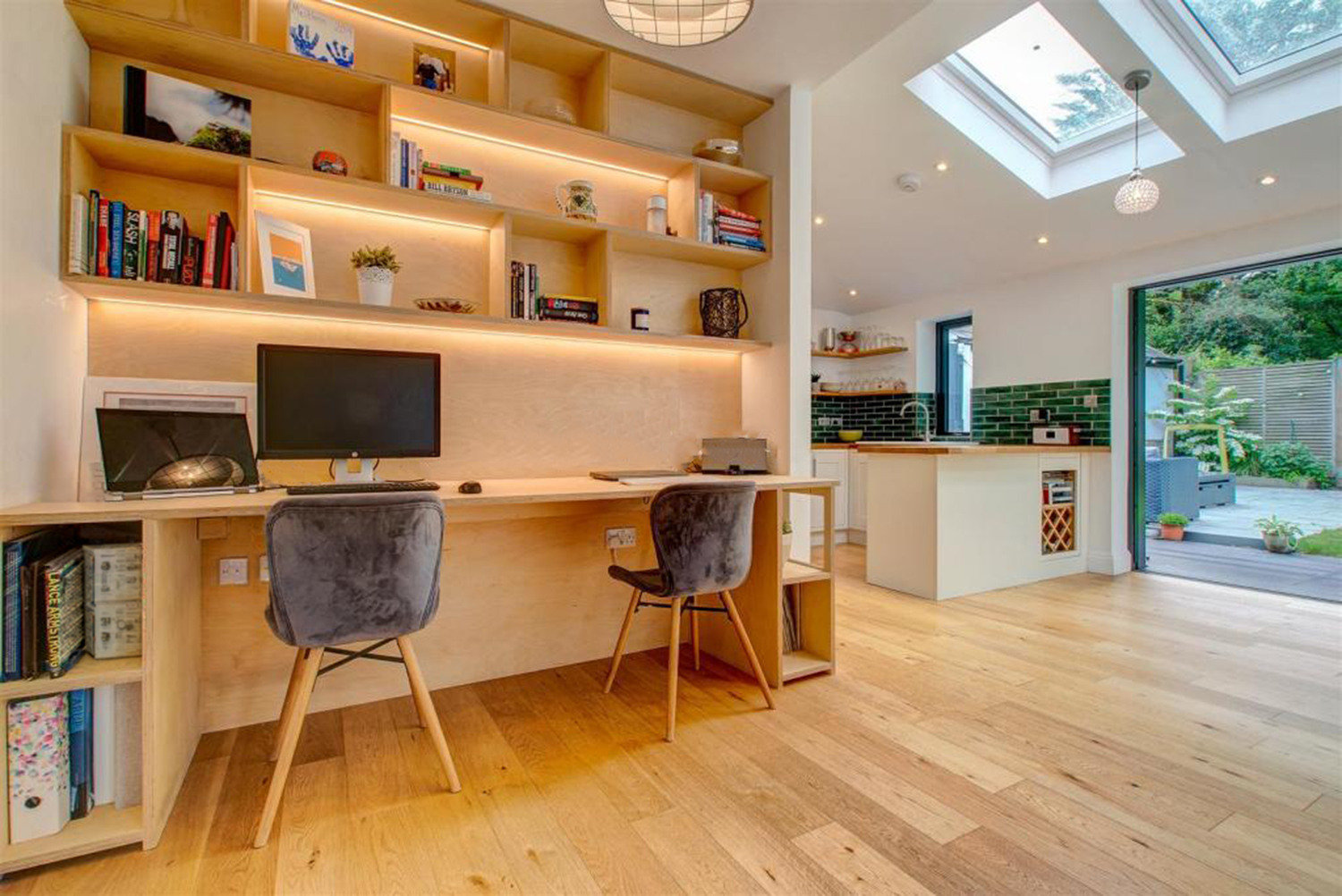 |
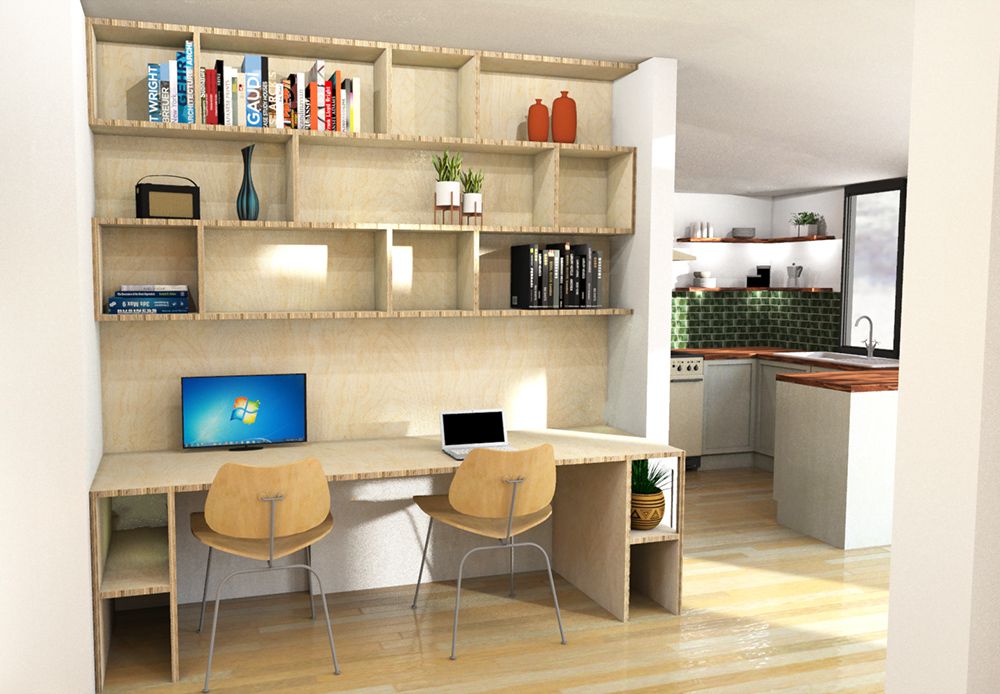
| A home working space we designed in an underused area of our client's kitchen |
|
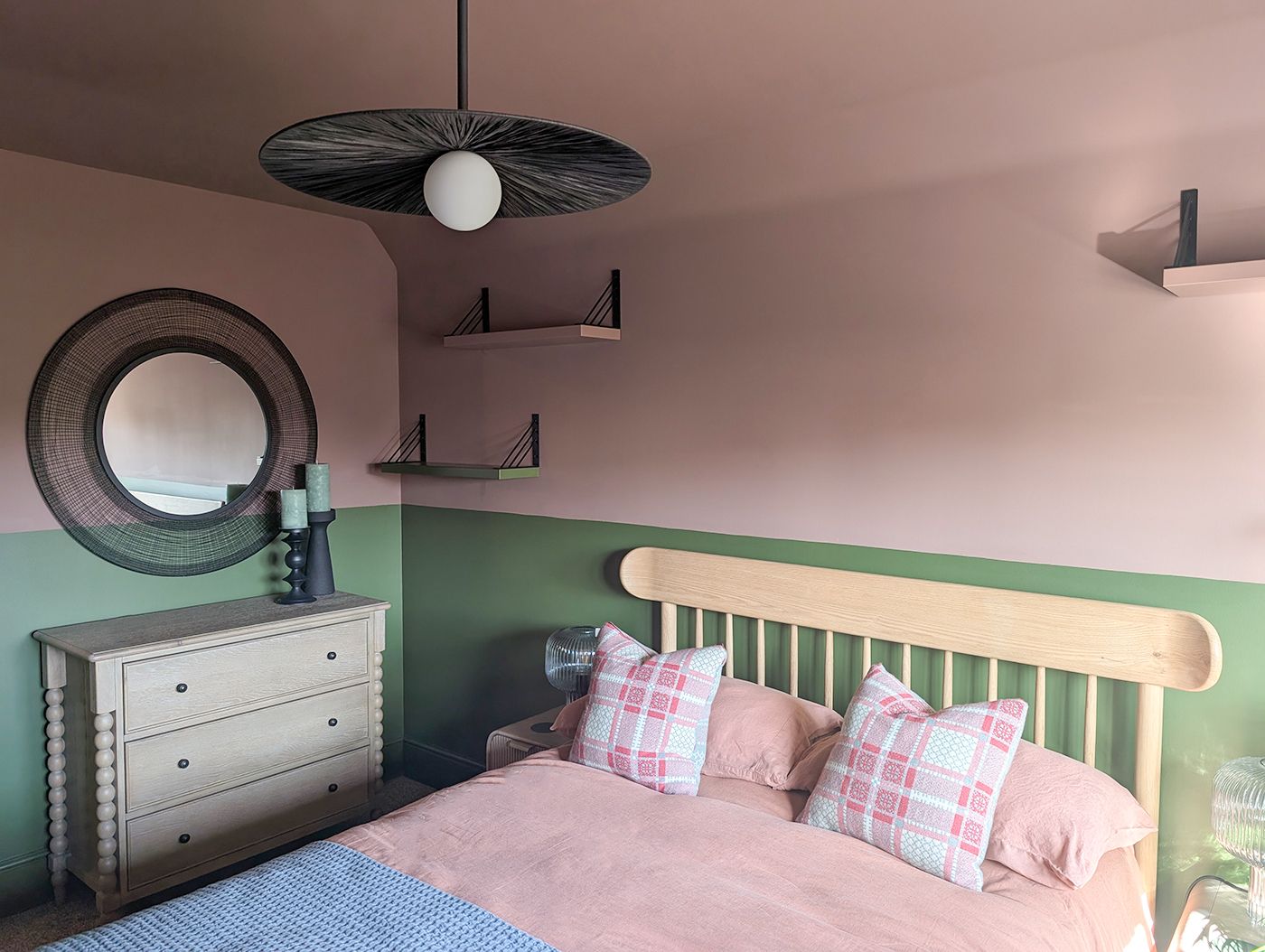
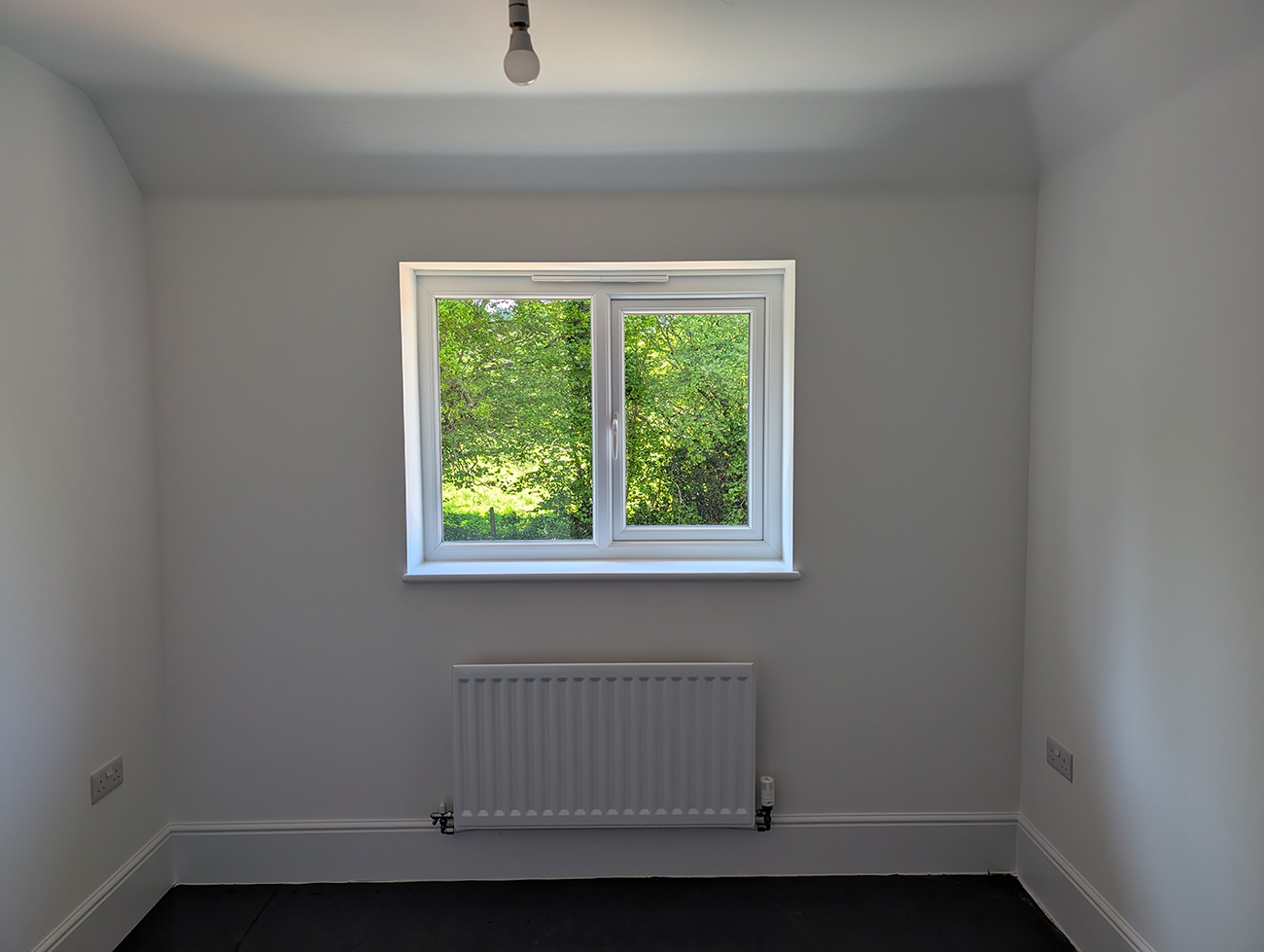
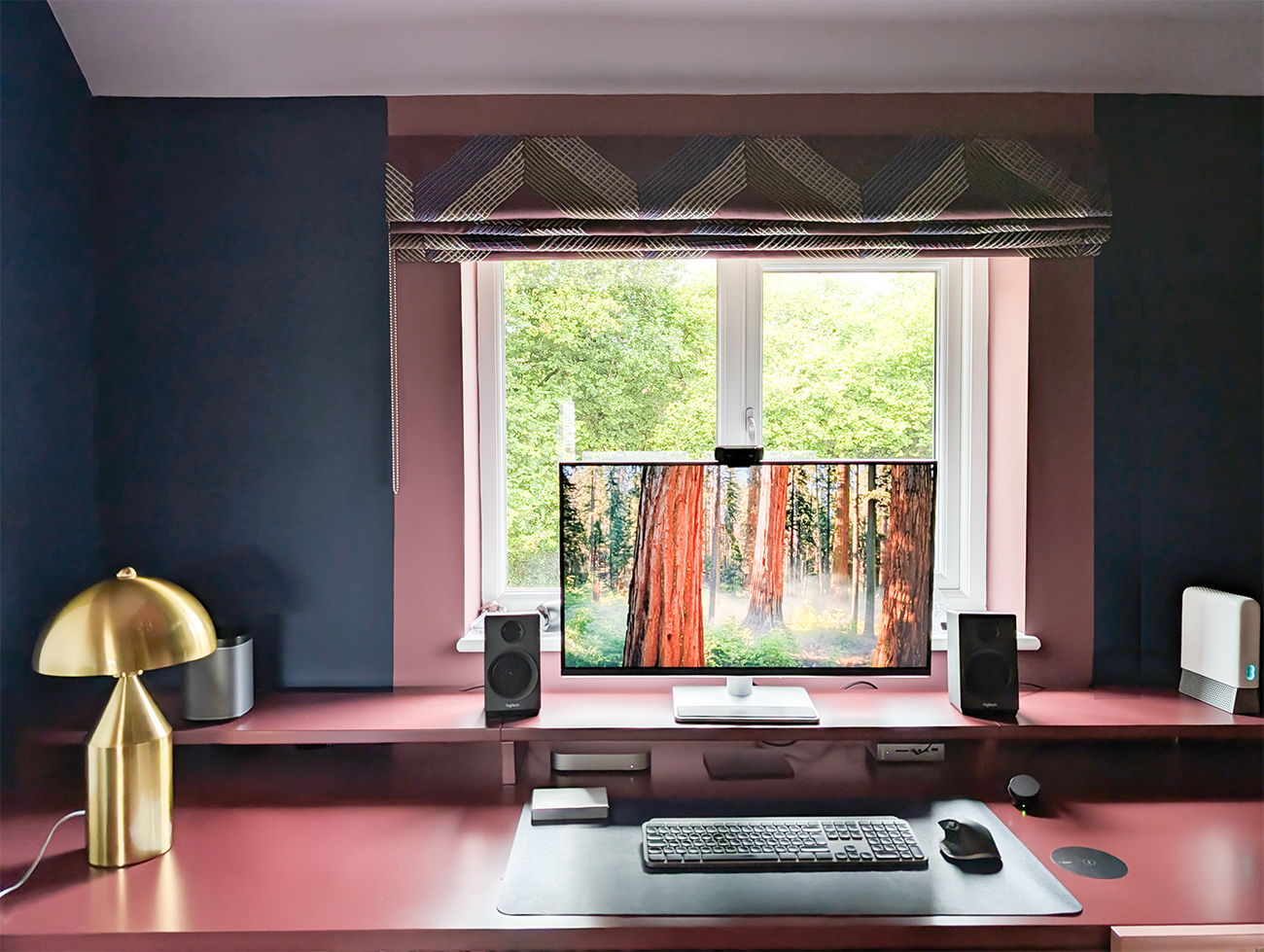
It seems that people would like to choose where they work - some find offices difficult environments to work in, with constant chatter and interruptions decreasing productivity. If those people are happy to work from home and have the space to do so, then I see no issue with a continuation of this set up. I would ask them to consider their working environment though - many people had to find a temporary set up during lockdown and were working in less than ideal spaces - we’ve all seen many an online meeting where someone was sitting on the edge of the bed. This isn’t great for your physical or mental health. If space allows, it's much more preferable to work in a space with a proper office chair and a desk, away from the place where you sleep. During and after lockdown, we continue to get enquiries asking for help with creating home offices, and I think it’s really important that your home office is a nurturing and supportive environment. On a recent project, we created two home offices in two bedrooms of a new build house, which greatly improved the enjoyment of the people working there. Below is one of the offices - would you rather work in this: |
 |
|
Or in this? |
 |
|
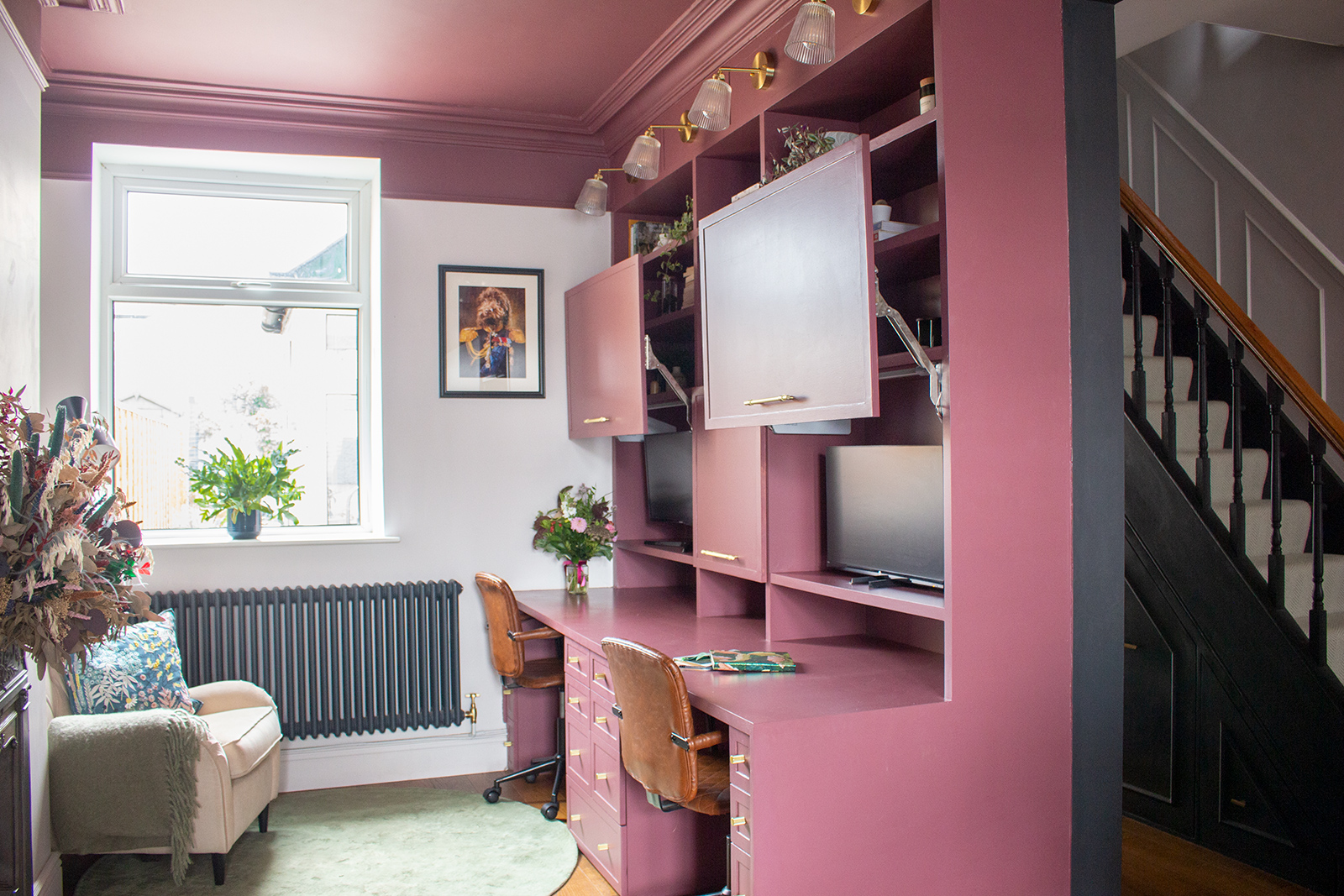
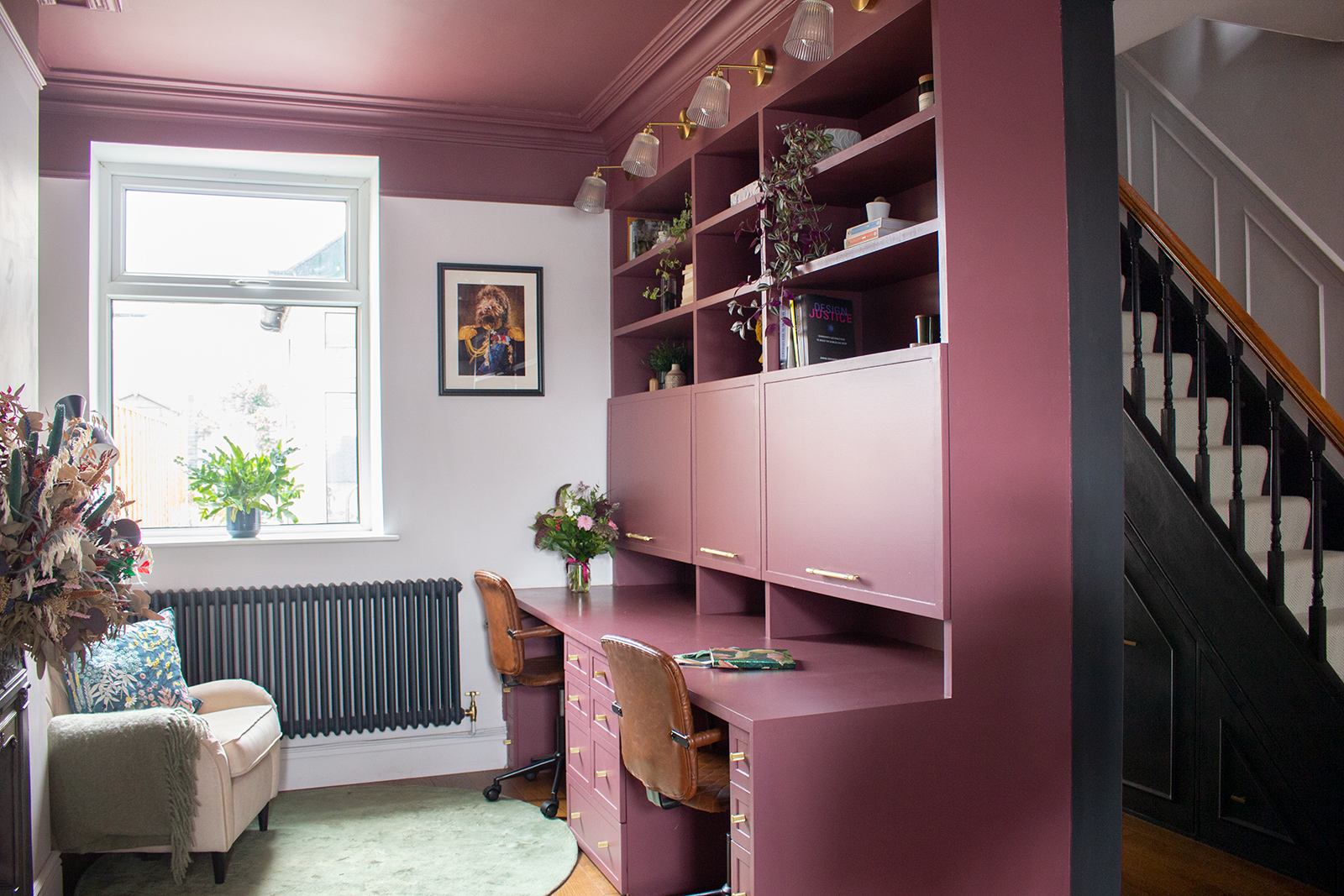
The office designs were definitely improvements, but I would also point out that the couple were using two bedrooms in a four bedroom house to work in. They would have paid more for a four bedroom house than a two bedroom one, with potentially higher mortgage costs. In these types of scenarios, the employees are effectively paying the employer’s office costs. Something else to weigh up. If there are no spare bedrooms in your home to work from, there are other solutions. We worked with a young couple a few years ago who didn’t have two spare bedrooms, so they opted to work in the back area of their living room. This was a typical Victorian terraced house, and the front and rear reception rooms had been knocked into one to make the space larger. The front half of the room was being used as the living room, but the back half of the room didn’t have a purpose, so we decided to place the desk here. The couple were happy to work side by side (not everyone wants to do this!), so we designed a desk that looked like a built in piece of furniture, a little like a dresser. We cleverly hid the computer monitors behind pull up doors, so that when our clients had finished work, they could close the doors and not see the screens. This helped them to feel a sense of separation from their workday, and meant they could use the room to relax in without thinking about work. |
 |
 |
|
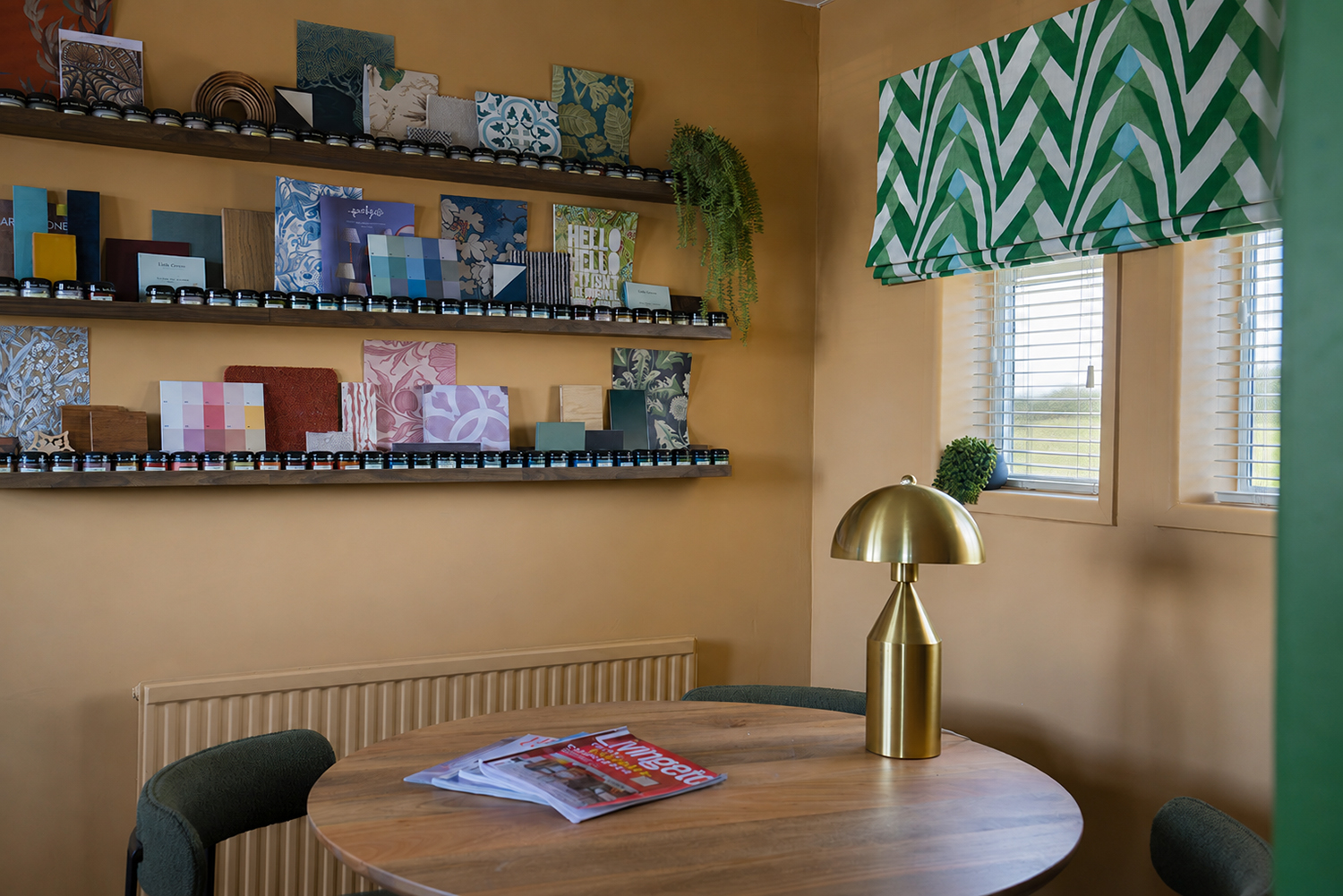
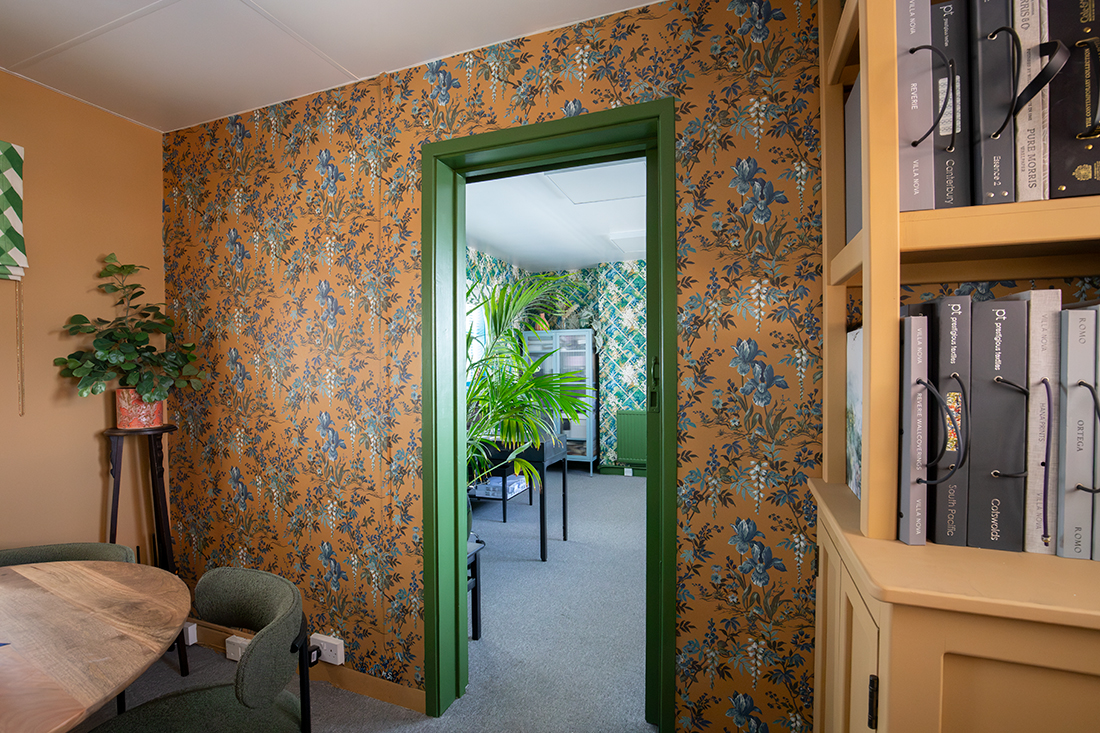
This couple enjoyed working from home and weren’t distracted by working side by side, and I think part of the reason that it worked for them was that they didn’t have children. This is a serious point to consider, as things change considerably for home workers when they have children or caring responsibilities. Some parents found the flexibility afforded to them in lockdown really helped with their childcare needs, and have seen that since lockdown, with more companies asking people to work in the office, things have become harder for them to juggle. One employee quoted in a 2024 study said, “A lot of parents were previously told they can leave around 2 pm to pick up school age kids and can finish the day at home, but managers have said that leaving early was no longer allowed”. If workers really are required to be in the office for full days, five times a week, then parents are left with the choice to either pay for expensive childcare, lean on friends and relatives to help, or work within school hours only. It seems here that flexibility is key; for those who wish to work in a hybrid of work and home, employers need to be understanding and not penalise those who are effective and productive employees just because they work at different times of the day to others in the office. For myself, the decision to move to an office came when my children had finished school and when I had people working for me. As my office at home was in the loft, employees had to walk past my bedroom every day to get to their desks or to go to the loo. It felt too personal and awkward for me to have them in my home, and it was also difficult to leave them in the house when I went to a client meeting. It made sense for us to make the move to an external office - we could hold client meetings there and invite the fabric/wallpaper reps and tradespeople to see us there. It has helped me to switch off a bit more at the end of the day, and I find the short commute adds in another layer of physical and mental separation from my work. Of course, when we did settle on an office space, we made sure it could be decorated and turned it into a lovely place to work. Before we moved in, the rooms were painted white with no decoration at all. We transformed them with wallpaper, paint and new blinds, before adding furniture. Here’s how the studio looks now: |
 |
|
This is the first room you enter |
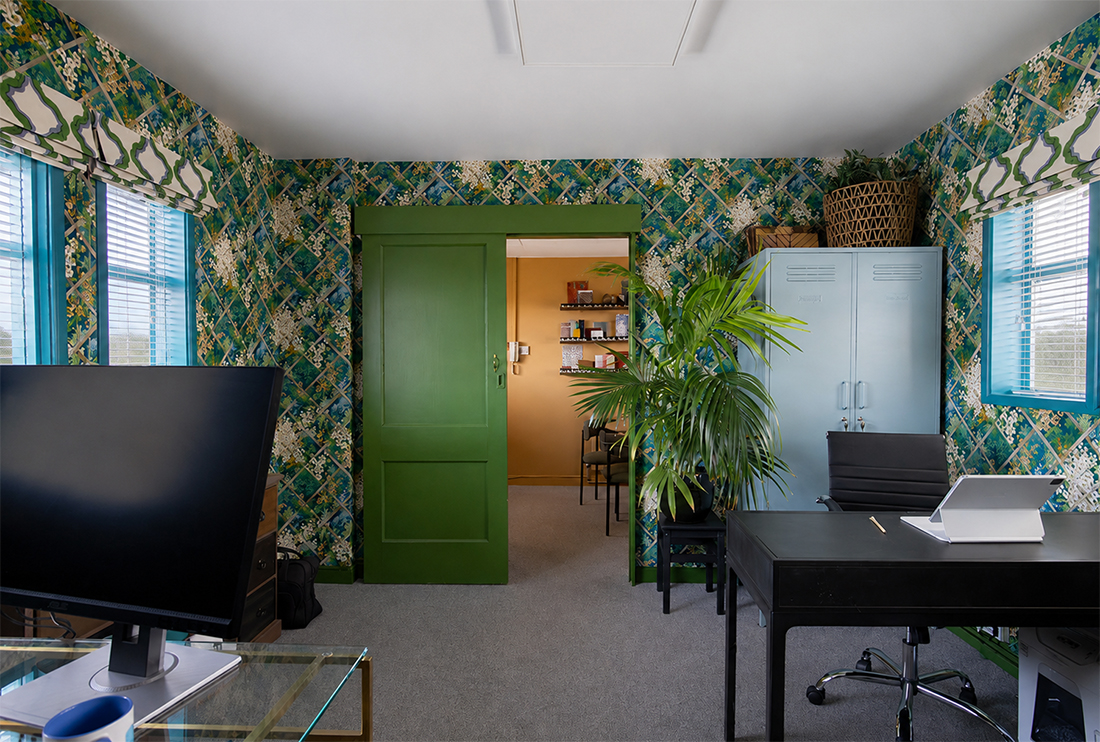 |
|
The view from the larger office into the smaller one |
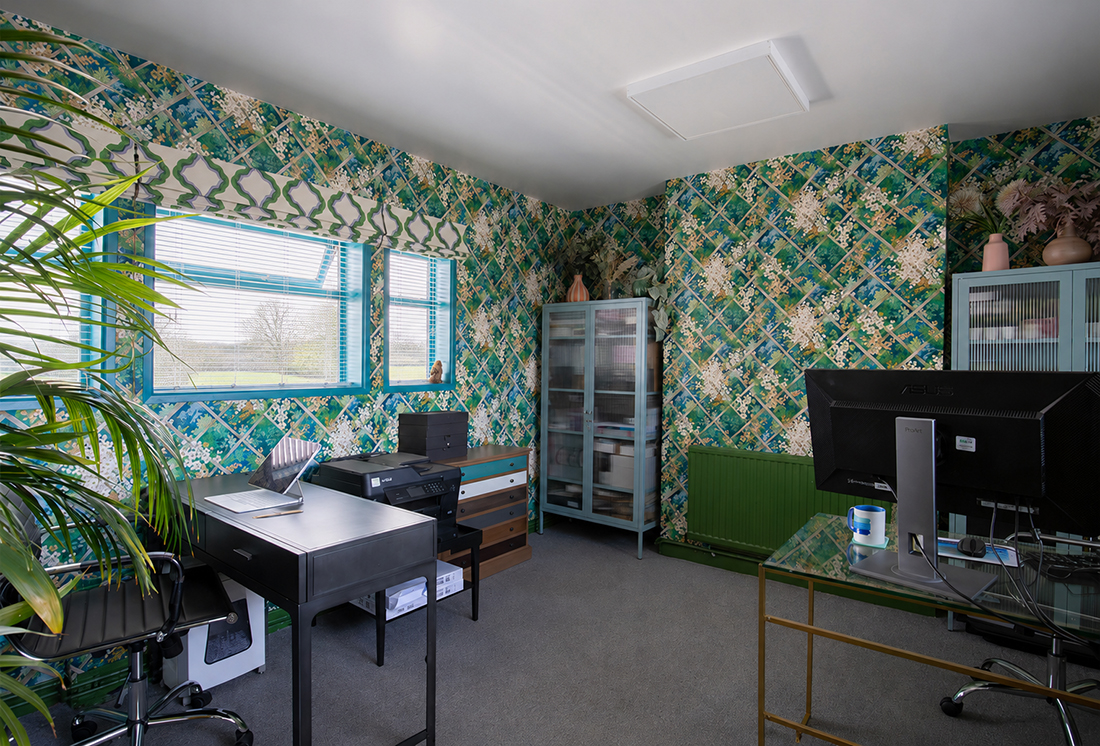 |
|
Wherever you choose to work (if you are given a choice), it is vitally important that the environment you are in gives you what you need to work comfortably. If you have an office at home, it would be worthwhile to make sure it suits you ergonomically and decoratively, so that you enjoy being there, and that there is a way to disguise it or hide it in the evenings. A great space to work will most definitely help you to concentrate and be your most productive self, and that goes for offices provided by your employer too. |

Welcome to the design blog, where you'll see posts about anything from the projects we are working on, to the latest fabric and wallpaper collections, and all things interiors related. We love colour, pattern, architecture and old buildings, and we love to share our finds with you.
Happy reading!