Design, Details, Delivery - from fabric to finished curtains

 |
||
|
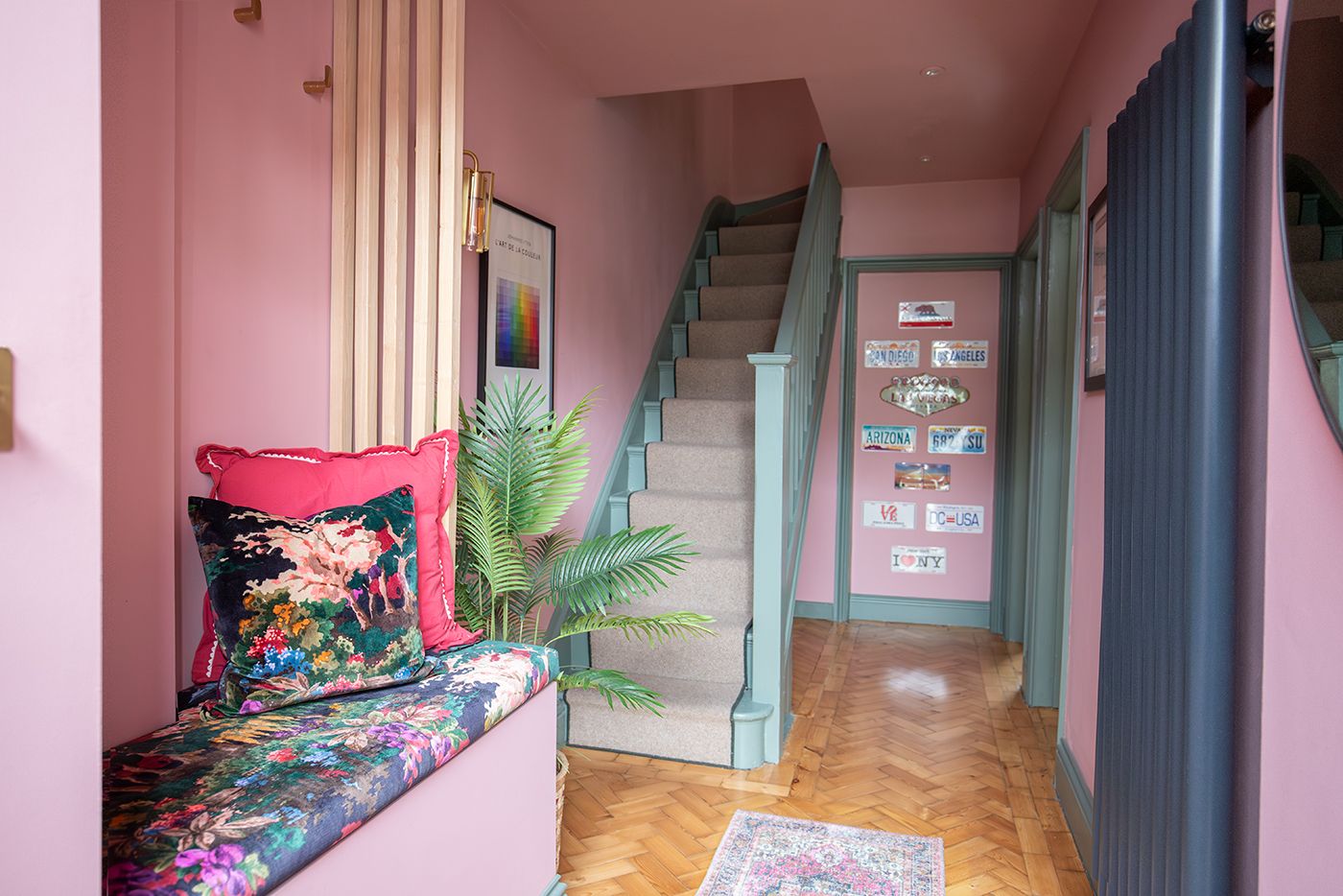
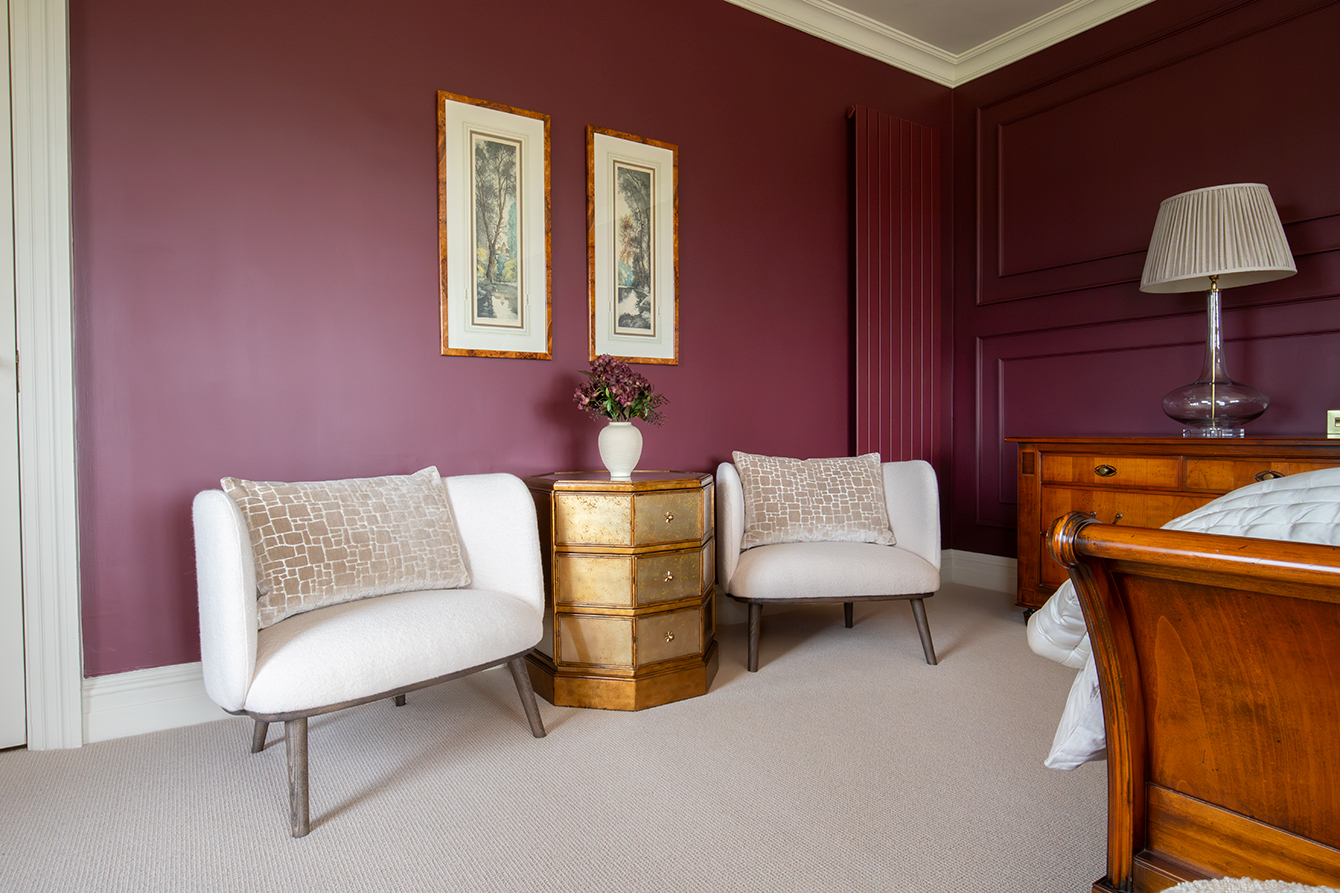
As the weather slowly starts to turn, and the nights get darker a little bit earlier every day, it’s natural for us to start thinking about how to make our homes cosier. And there’s nothing more cosy than thick, soft fitted carpet underfoot - it just makes a house feel much more like home the minute it's laid. Personally, I’m quite a big fan of hard flooring with an extra large rug on top, so that I can have the best of both worlds, but for those who like carpet, there’s nothing else like it. It’s soft and warm, and will reduce your heating bills by adding a layer of insulation. If you do decide to carpet your home, there are lots of things to consider, and to make sure you don’t miss anything, we’re going to share our carpet selection process with you. Loop, cut pile or twist? We always start by asking some questions to determine which carpet will be best for our client’s homes. Style and personal preference are important and of course, play a factor, but we always begin with the practical stuff first. I think the most important question is - do you have pets and/or children? This will determine how the carpet you choose is made. Most carpets in this country are tufted, which means that yarn loops are pushed through a backing and either left in a loop or cut to make a pile. A twist pile is a cut pile with the fibres twisted together and heated to set the twist, and behaves very similarly to a cut pile. Some people like the cut or twist pile as it is softer, and some people like the loop as the texture is more interesting and it is generally more hard wearing. If you have pets, their claws can get caught in the uncut loops, which can be painful, and can ruin the carpet, so it's best to avoid a loop if you have a cat or dog. Similarly, if you have children, a loop pile is not your friend. The loops can easily catch on toys, fingers, or other small items which are more likely to be on the floor if you have young children in the house. These items could pull out the loop and spoil the look of the flooring. If you decide to avoid a loop carpet and opt for a cut pile instead, then make sure the pile is short and not a deep one. Deep piles can trap dirt and spills more easily, making them harder to keep clean and hygienic. If you don’t have young children or pets, you are of course free to choose a stunning textured loop, which can look more contemporary and feel firmer underfoot. In the project below, we chose a loop carpet which has a lovely textured stripe effect: |
||
 |
||
|
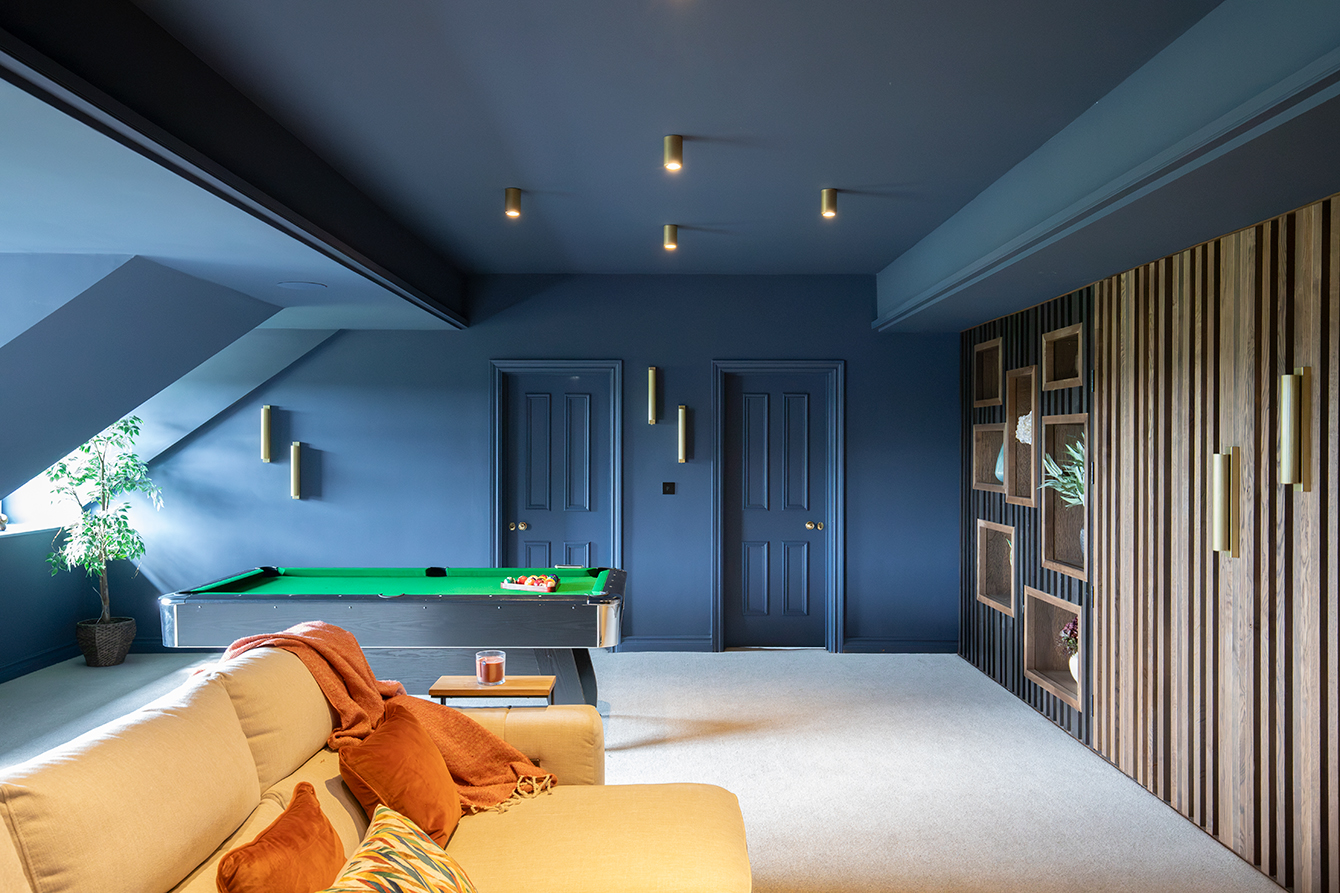
And in the same home but in a different room, we installed a short cut pile carpet for softness: |
||
 |
||
|
Short or long pile? A long or shag pile is very soft and luxurious underfoot, and is great for stepping on straight out of bed. It makes a room feel warm and cosy and adds an extra layer of interest to the floor, as it is very three dimensional. You do need to consider how best to clean this type of pile, though, as the longer fibres will follow the direction of the hoover and leave ‘lines’ behind. Some people love this look, and others hate it, so it comes down to personal preference. The deeper pile also makes it harder to get right into to clean it properly, so you might need a specialist carpet cleaner. I’d suggest that a deep pile carpet isn’t practical for a hallway, as it will trap the dirt that inevitably comes through the front door (even if it is a shoes off household). |
||
|
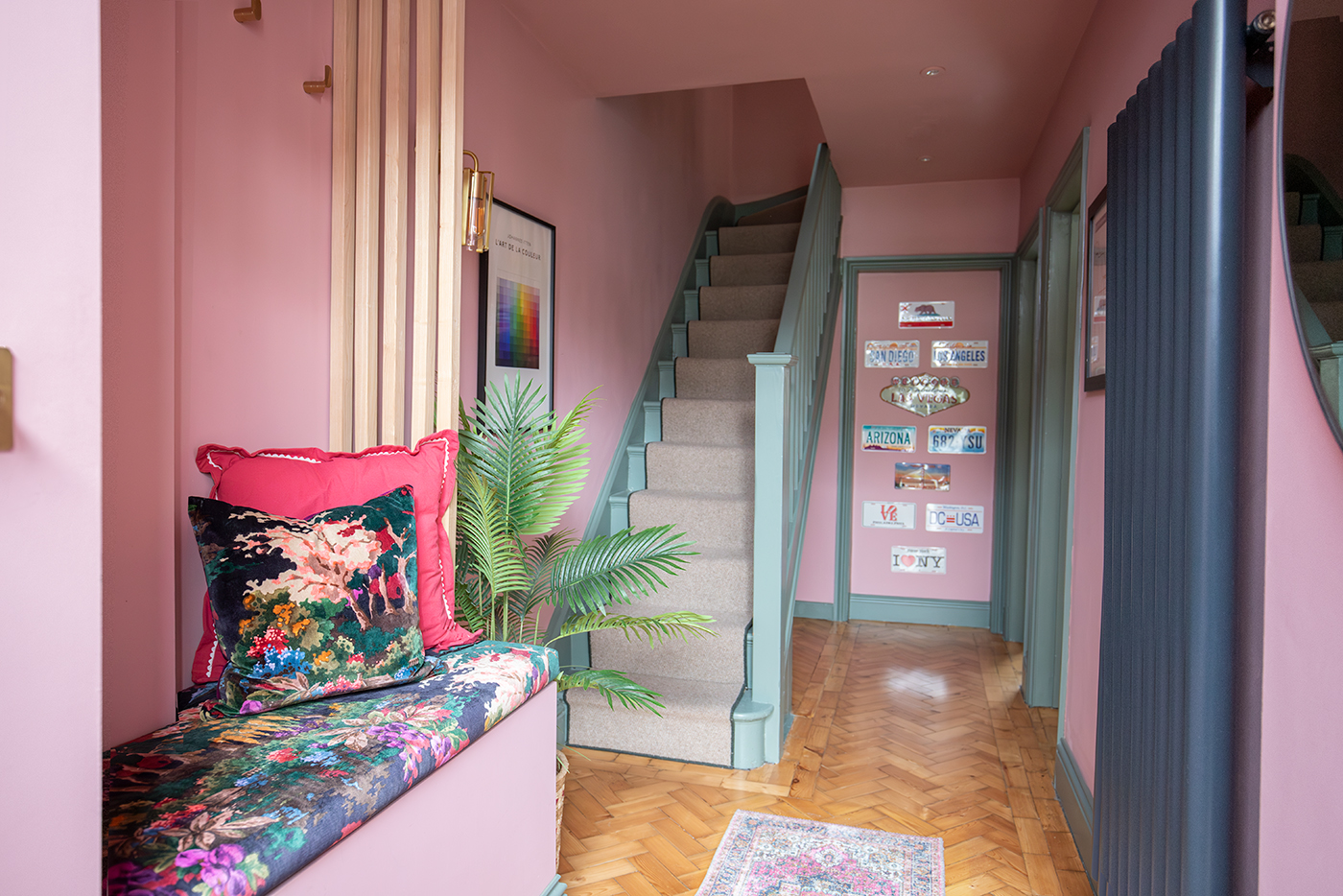
A short pile carpet is much easier to clean, and the different textures available give you a lot of choice for how the carpet will feel on your bare feet. It has a clean and unfussy look, and its short pile means that it won’t be crushed by people walking on it, so it won’t show footprints or furniture marks as easily as a long pile carpet. This type of carpet is great for high traffic areas such as hallways, stairs and landings, as dirt stays close to the surface and spills don’t absorb deeply into the carpet, meaning they can be cleaned more easily. In our Colour Drenched Family Home project, we used a short pile carpet for the stairs with a flecked design and a contrasting edge: |
||
 |
||
|
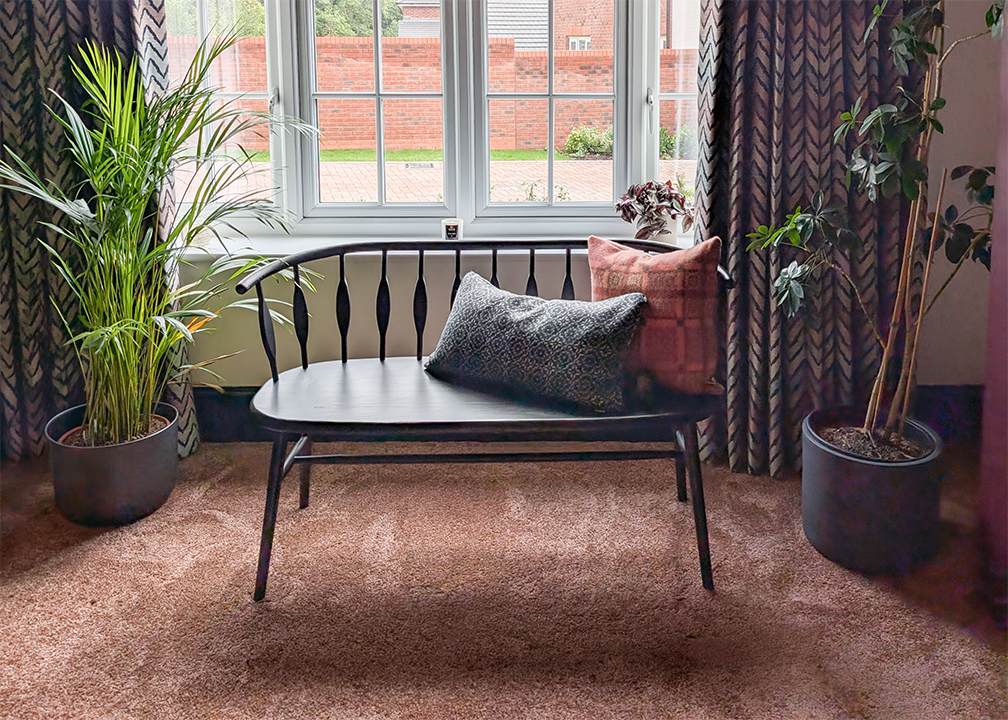
In contrast, these clients wanted a deep pile carpet for their living room, to create a sense of luxury: |
||
 |
||
| Which carpet fibre is best? | ||
|
There are quite a few materials which carpet can be made from, and it can be confusing when there is so much choice. There is no best fibre for everyone, as it depends upon your room, lifestyle and budget, but we help our clients to choose by explaining the pros and cons of each one. |
||
| 100% Wool | ||
|
Wool is naturally stain resistant, hard wearing, insulating and long lasting, but it is more expensive than man made fibres. It can be treated to be moth resistant, and is environmentally friendly because it is a naturally growing product, often made in Britain. It is also flame resistant and eventually biodegrades, so it’s a good choice for those considering sustainability. It absorbs dust, pollen and other airborne allergens, but it isn’t as stain proof as a man made fibre, so care needs to be taken when cleaning it. Wool Mix These carpets are usually 80% wool and 20% synthetic fibres, commonly 10% polypropylene and 10% nylon. They have all the benefits of wool, but with the addition of synthetic fibres to add structural stability and abrasion resistance, so they withstand wear and tear for longer. Wool mix carpets are generally a more affordable option than 100% wool. |
||
| Polypropylene | ||
|
Polypropylene is an entirely man made fibre, and is extremely hardwearing. It is highly stain resistant and as it doesn’t absorb moisture, so spills can be cleaned up easily. The fibres don’t hold up to heavy objects like wool does, so the carpet can look ‘crushed’ over time. The colour ranges and style options can be limited, often with lots of flecks in the designs. For this reason, these carpets can look a little unnatural, but they are a fantastic option for a child’s bedroom or for a lower budget project. Polyester Polyester carpets have all the same advantages of a polypropylene carpet, but they feel softer and offer more flexibility in terms of colour and appearance. It is a great budget friendly option, and is also the closest fibre in look and feel to wool, although it has a slightly higher sheen level. It has all the same stain resistant qualities as polypropylene, but shares the same disadvantage in that the fibres don’t bounce back from pressure very well, so it can flatten or crush over time. |
||
| Nylon | ||
|
Nylon was first introduced into the market as a man made alternative to silk, and is known for its durability and easy maintenance. It wears better than other man made fibres, but it is also more expensive. It is stain resistant and moisture resistant, and can be steam cleaned for a deep clean, but isn’t as soft underfoot as other carpet materials. Nylon can be dyed in a wide range of colours so there are many options to choose from. |
||
| Natural and plant based fibres | ||
|
All man made carpet fibres are made with chemicals, and they release volatile organic compounds (VOCs) into your home. This process, known as off gassing, is usually strongest when the carpet is newly installed, but it can continue for years, and for this reason, some people wish to avoid a synthetic carpet. Plant based fibres such as sisal, seagrass, jute and coir are a good alternative as they don’t release VOCs, although their backing materials can include some man made materials. Natural fibres like sisal are incredibly strong and they resist wear and tear, and the textured finish makes them popular. They are naturally moth resistant and easy to keep clean - the fibres don’t trap dirt like more plush carpets so a regular hoover is all that’s needed. The downside is that they absorb water and moisture, so they are unsuitable for kitchens and bathrooms, and can shrink or stain very easily. For this reason they should be dry cleaned, and any spills should be blotted off and then hoovered when dry, or cleaned using a specialist powder. Some people dislike the rough texture, and it can be uncomfortable for young children to crawl or play on. |
||
 |
||
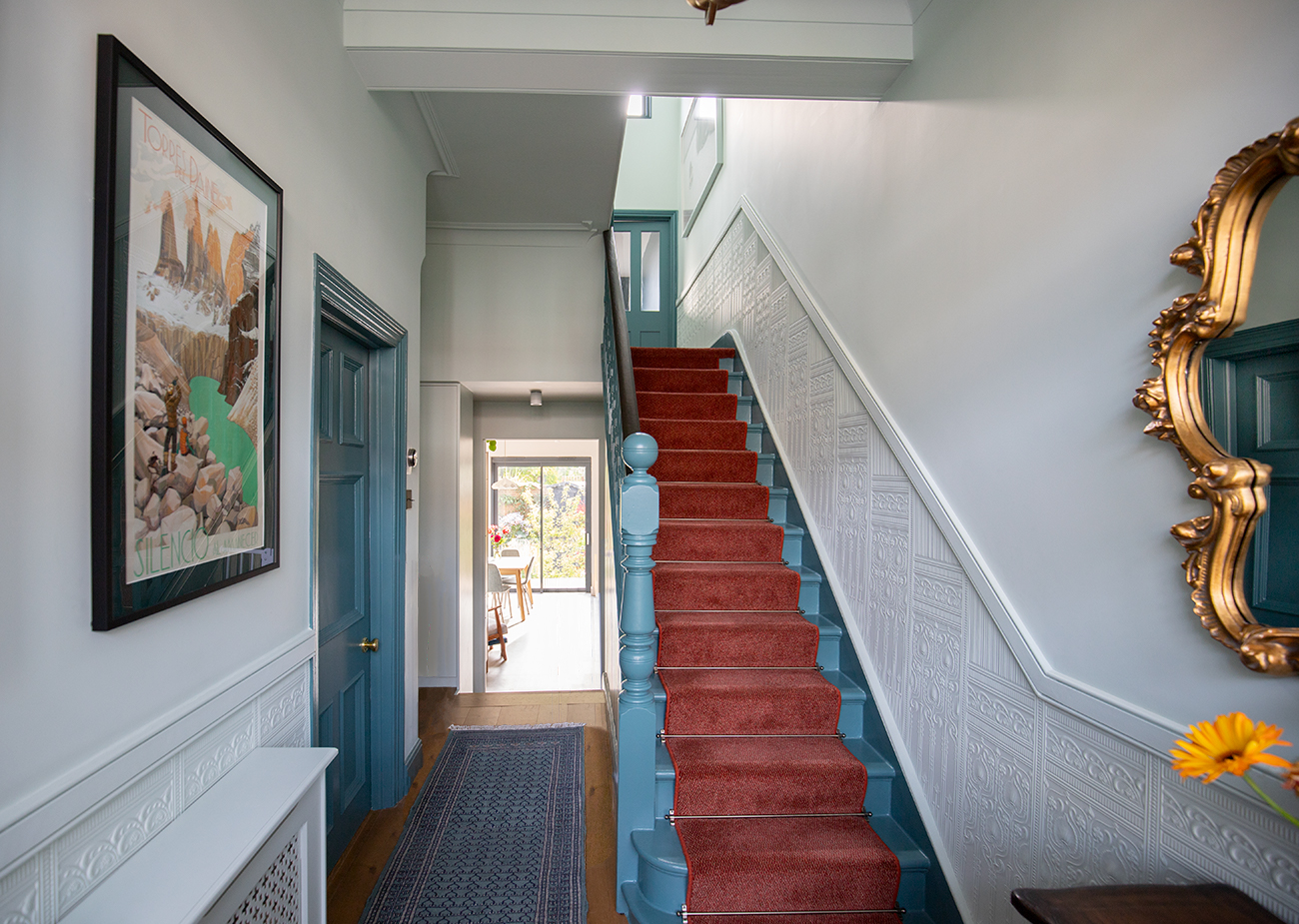
| we chose a rust short pile carpet with stair rods for the staircase in our Bold Edwardian Terrace project | ||
|
Which room is the carpet being installed in? |
||
| We ask our clients this very important question as it will help determine the type and material of the carpet. Higher traffic areas, such as hallways and stairs, will need a hard wearing carpet which can be cleaned easily. Lower traffic areas such as bedrooms can have plusher, deeper pile carpets, or ones with less durability. If a carpet is going on the stairs, it’s also worth looking at the sample and bending it to see if the backing will be exposed when it's wrapped around the steps. | ||
|
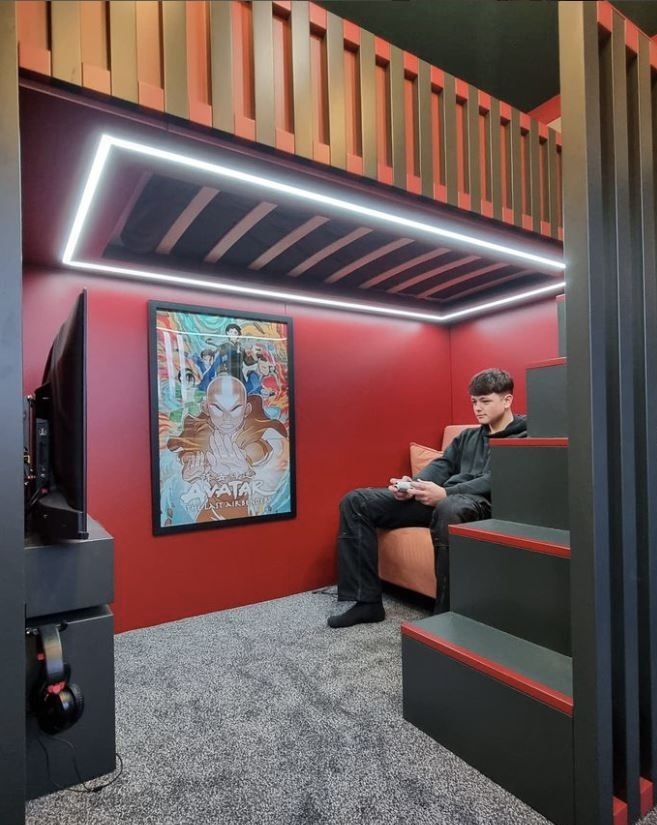
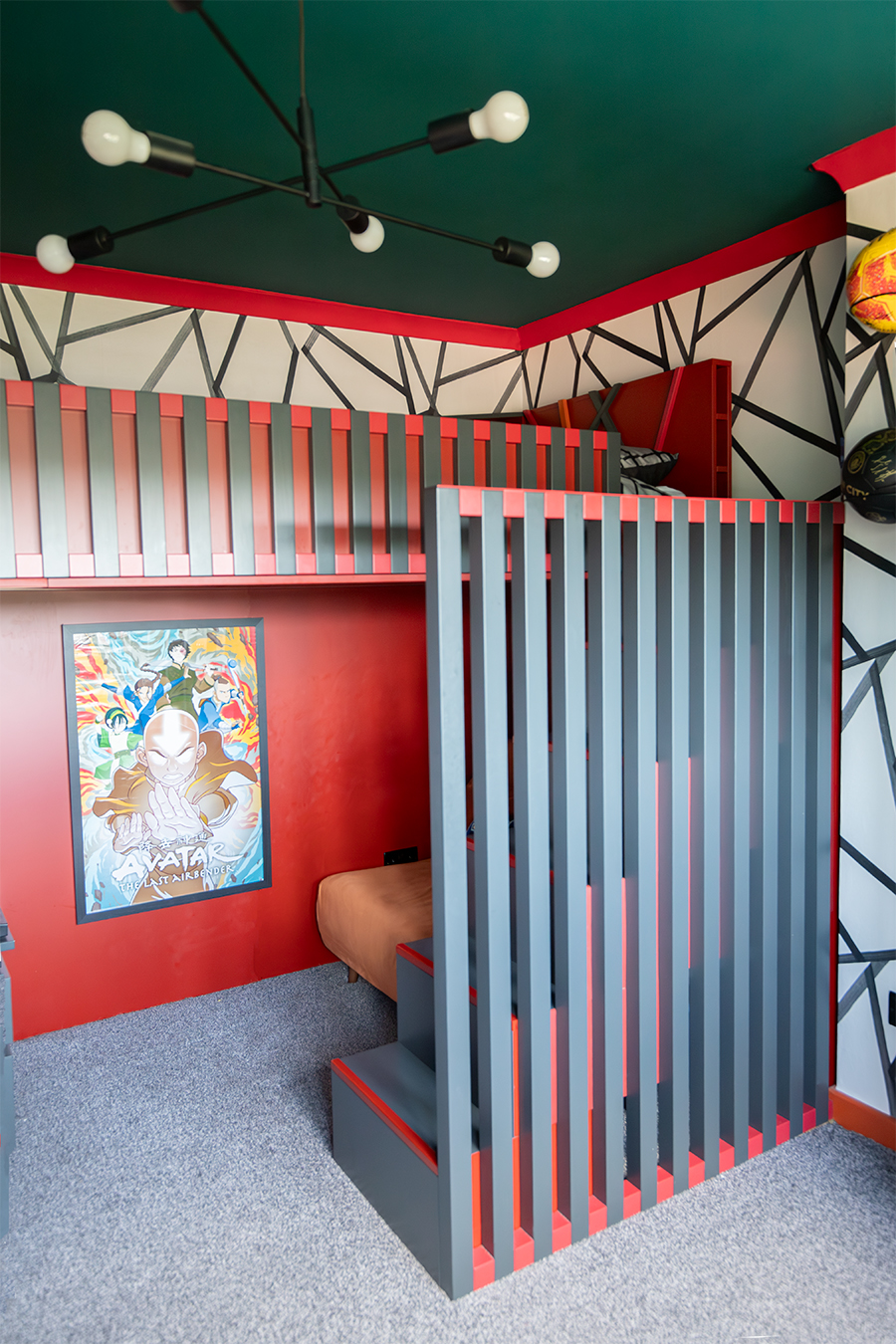
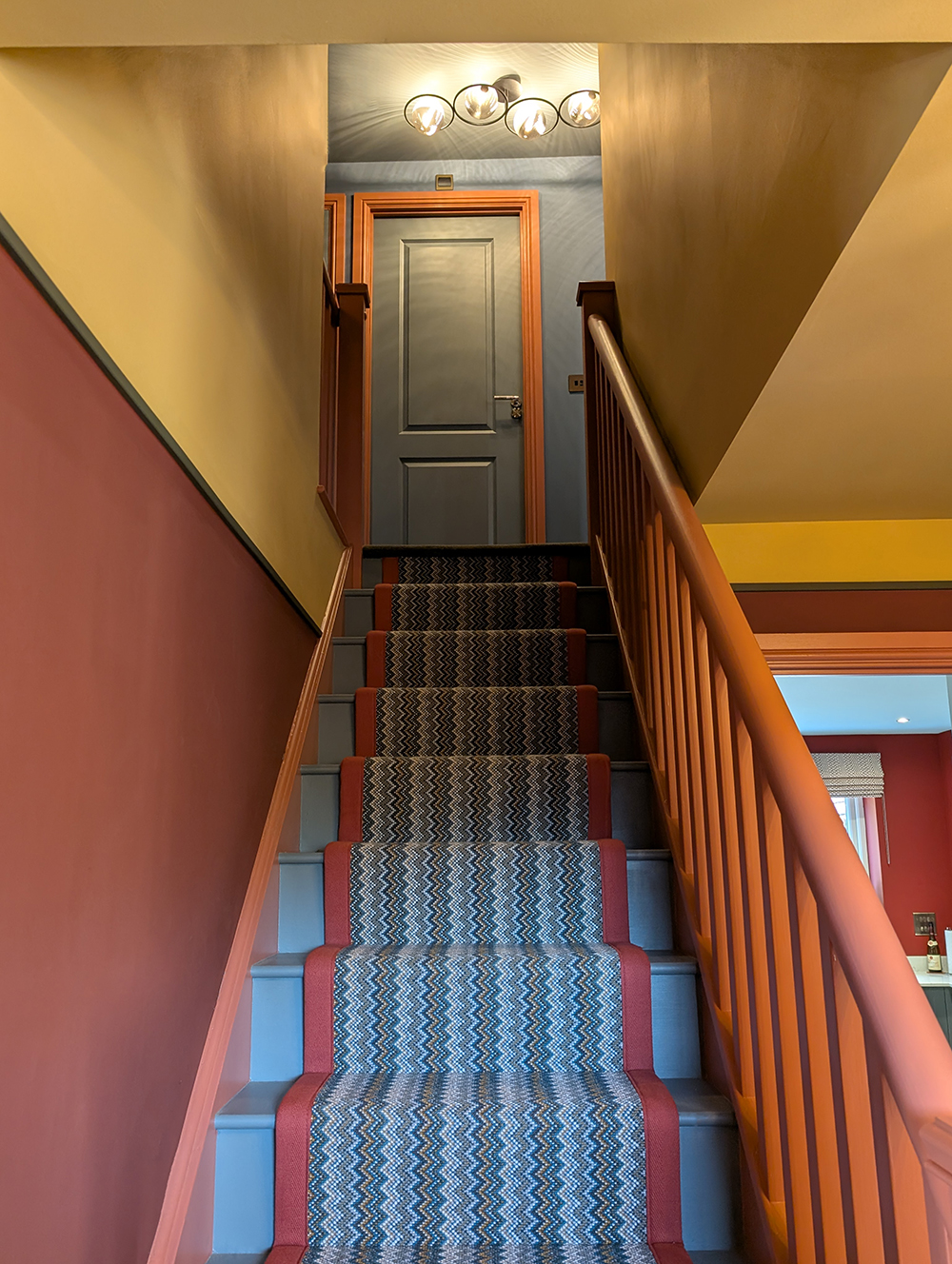
In our Ultimate Gaming Bedroom project, we chose a flecked polypropylene carpet because of its stain resistant and easy clean properties, and in the hallway below we selected a 100% wool looped carpet for the stair runner, edged with a recycled cotton woven tape: |
||
Colour and texture? We are usually designing a room whilst choosing the carpets at the same time, which makes it easier for us to fit the carpet into the overall scheme. We always get a sample and try it with the other decor items we have chosen, to make sure all the elements work together harmoniously. If our clients have children or pets, we usually opt for a colour that isn’t too light as it will show dirt, or isn’t so dark that will show pet hairs. |
||
| What is the best underlay for the carpet? | ||
|
This will depend on the room the carpet will be installed in. Stairs and hallways need a firm underlay, which is thinner and denser to support the amount of traffic this area will get, and will stop the carpet wearing on the steps. A crumb rubber underlay, made from recycled tires, is great for under the stairs. Bedrooms and living rooms have less traffic, so a lightweight underlay like PU foam which is soft and thick will support the carpet and add to the plush overall feel. Will the carpet need to have a join? Most carpets come in four and five metre widths, and some rooms are wider than this, so the carpet might need to be joined. We discuss this with our clients and our carpet fitter, as the joins can often be placed in areas where they are not so prominent, such as under sofas or beds, and away from a light source like a window. |
||
| Door bars | ||
|
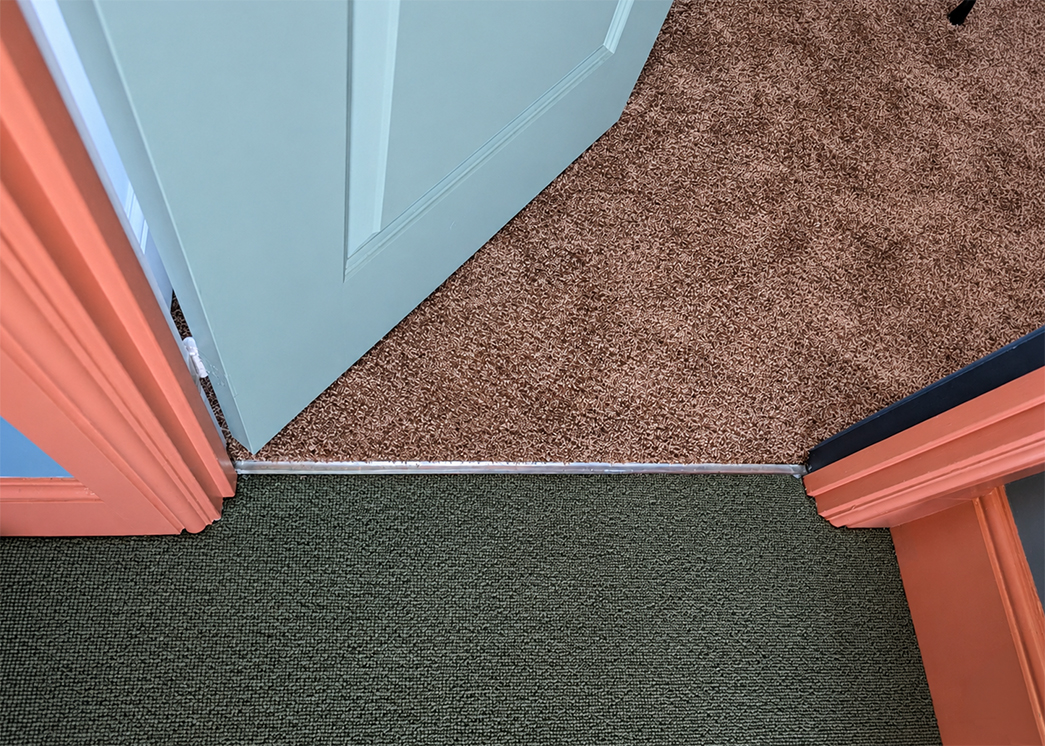
The final thing we choose with our clients are the door bars. These go under the doors and cover the joins in carpets from one room to another, or from the landing or hallway. When choosing, we consider the finish of the door handles and other hardware in the room, and also the overall look of the home. It makes sense to have a matt brass door bar if the rest of the hardware in the room is matt brass, but if there are mixed finishes, it can be more tricky. In the home below, we opted for satin nickel door bars as the door handles were all satin nickel, even though we had used a mixture of brass, chrome and black finishes in the rooms. |
||
 |
||
|
Getting the job done The final part of the process is the installation, and there are a few practicalities to think about. Who will measure for and install the carpet? If you are replacing old carpets, who will dispose of them? If the old carpets have a lower pile than the new ones, will the doors need to be planed so that the new carpets fit underneath (known as easing)? Who will move and replace the furniture after the carpet is fitted? These parts of the process are considered and included in our service, so that our clients don’t have to worry about these things or do any of the work themselves. We also have our decorator on standby, so that if the walls or skirtings get damaged when the carpet is installed, it isn’t a huge problem. Whichever way you choose to install your carpets, they will enhance your enjoyment of your home, and with regular cleaning, they will last for many years, so they are worth the investment. |

Welcome to the design blog, where you'll see posts about anything from the projects we are working on, to the latest fabric and wallpaper collections, and all things interiors related. We love colour, pattern, architecture and old buildings, and we love to share our finds with you.
Happy reading!